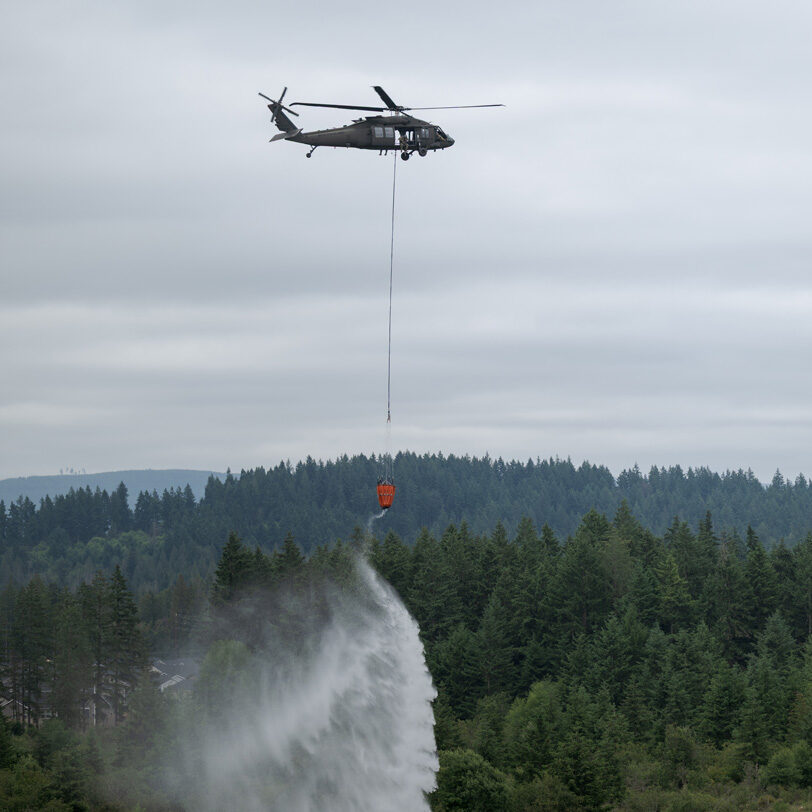
Wildfires can occur anywhere, at any time. Due to warmer weather and increasingly dry conditions, Western Washington continues to experience wildfires each year. Each year, wildfires consume homes in the wildland-urban interface – defined as areas where homes are built near or among lands prone to wildfires. Studies show that as many as 80 percent of homes lost to wildfires may have been saved if brush around the homes were cleared and a defensible space was created around structures.
Taking steps now to protect your home and property can make a significant difference when a wildfire occurs.
We offer a 30-minute Wildfire Awareness session for HOAs or community groups.
During this session, fire district personnel will instruct and answer questions about basic preparation for wildfire events, identifying warning alerts and evacuation levels, and supporting prevention of wildfires.
If you would like to schedule a presentation, please submit a request through our event request form.
What Is Defensible Space?
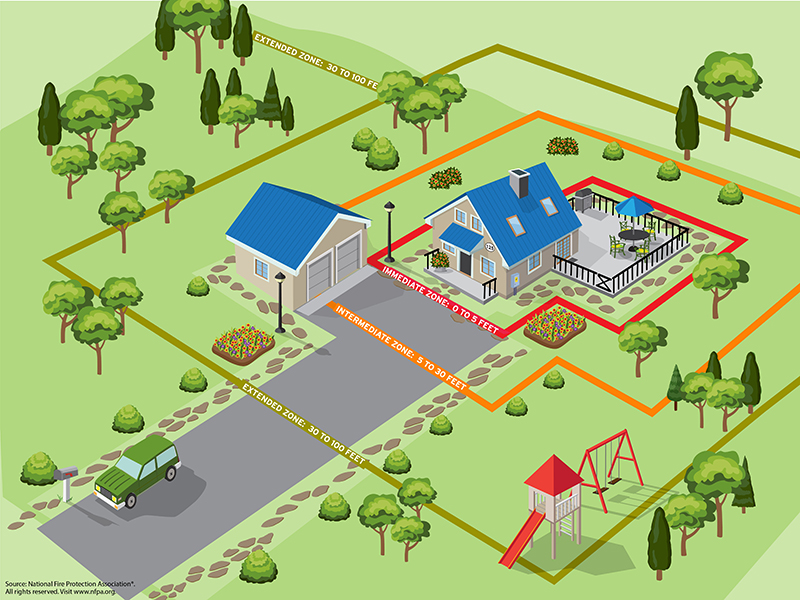
During wildfires, embers can be carried by the wind for long distances (up to a mile), from where the fire is. These embers can land on roofs, gutters, decks, or other small spaces around homes and can cause another fire. The National Fire Protection Association (NFPA) explains, “studies have shown that homes ignite due to the condition of the home and everything around it, up to 200 feet from the foundation. This is called the Home Ignition Zone (HIZ).”
In the HIZ there are three zones: immediate zone (0-5’), intermediate zone (5-30’), and extended zone (30-200’). Steps can be taken to prepare your home for each zone. Here are some examples:
Immediate Zone
- Remove all dead and dying plants from the yard, roof, gutters, porch/deck, and under areas of your home
- Repair or replace damaged or loose window screens and any broken windows screen in box-in areas below patios and decks with wire mesh to prevent debris and combustible materials from accumulating
- Remove branches within 10 feet of any chimney
- Relocate firewood and lumber to 30-100 feet from your home
- Remove anything that can burn away from wall exteriors and out from underneath decks or porches.
Intermediate Zone
- Remove all dead and dying plants
- Trim trees to keep branches a minimum of 10 feet from other trees
- Create separation between any items that could catch fire
- Clear vegetation from under large stationary propane tanks
- Create fuel breaks with driveways, walkways/paths, patios, and decks
- Mow grass to a maximum height of 4 inches
Extended Zone
- Dispose of heavy accumulations of ground litter/debris
- Remove dead plants and trees
- Remove shrubs growing between trees
- Remove vegetation adjacent to storage sheds or other outbuildings within this area
Sign Up for a Defensible Space Assessment
Central Pierce Fire & Rescue is committed to helping community members in our area prepare for the wildfire season.
We are offering free Defensible Space Assessments, which identify the potential risks near your home and what steps can be taken to mitigate those risks.
What to Expect
After your request is received, a fire district representative will contact you within three to five business days to schedule your on-site defensible space assessment.
During the assessment, a fire district representative will walk your property with you, identify areas that may increase wildfire risk, and provide recommendations to help improve your property’s defensible space. Most assessments take approximately 30 minutes to complete.
Following the assessment, you will receive a personalized report by email outlining recommended actions to help reduce wildfire risk and improve your property’s resilience to wildfire.
Evacuation Levels
Be Ready, Be Set, Go Now!
Wildfires can spread quickly and unpredictably. While firefighters and police will try to provide advanced notice, evacuation orders may come with little to no warning. Understanding evacuation levels helps you act quickly.
Level 1
Be Ready: Be aware of the dangers in your area and start preparing for possible evacuation.
- Monitor local media
- Check on neighbors
- Create an evacuation plan and go-kit
- Prepare both the inside and outside of your home
- Leave if you feel unsafe – do not wait for an official evacuation order
Level 2
Be Set: Be prepared for sudden or short-notice evacuation.
- People who need help or more time to evacuate such as people with disabilities, people with small children, people with medical conditions, and people with large animals should evacuate at this level
- Have your go-kit in your vehicle
- Stay informed with local law enforcement and fire departments
- Remember to leave if you feel unsafe
Level 3
Go Now: Leave immediately.
- Danger in your area is current or imminent.
- Follow directions from law enforcement or fire departments and do not return home until officials have determined it’s safe
- Notification that it’s safe will be given as soon as possible